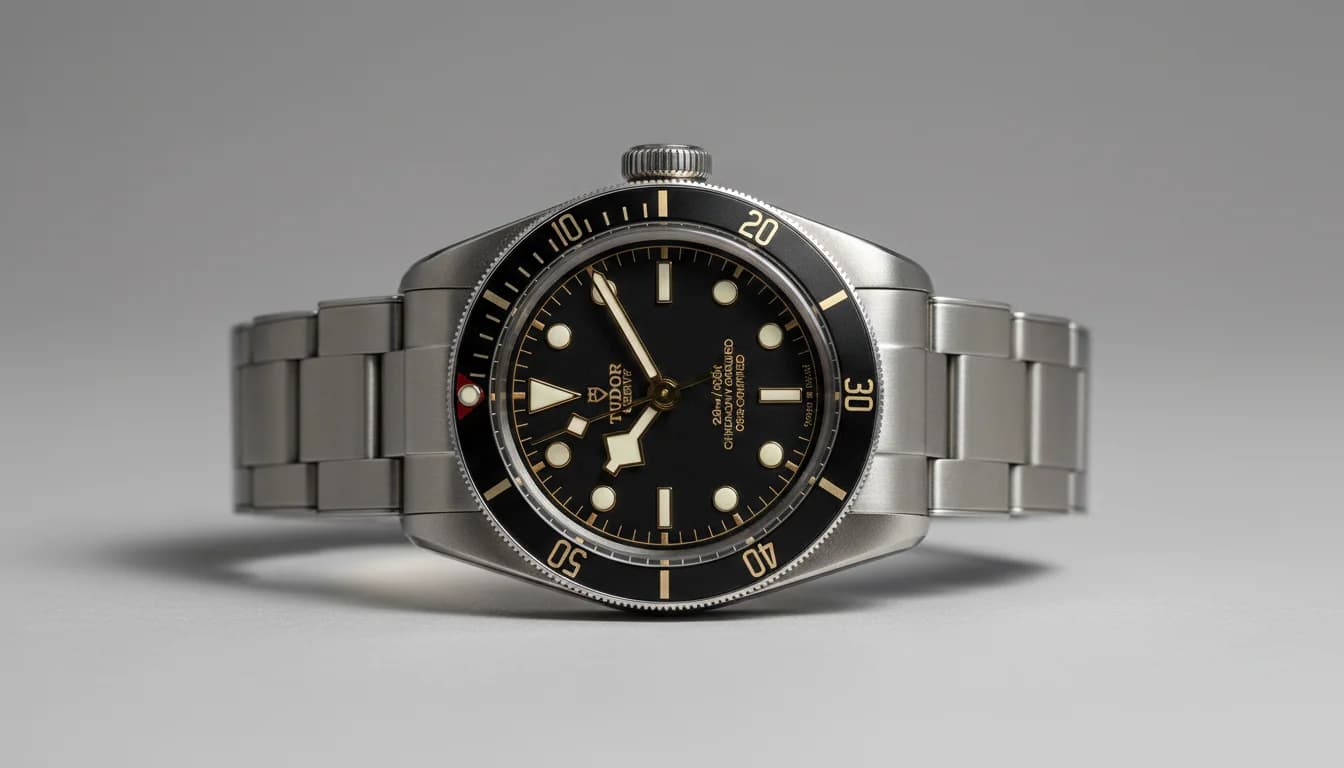
Tudor turned 100 on February 17, 2026. That is the day Hans Wilsdorf registered the trademark in Geneva, three years after he had built Rolex into a serious force. His logic was simple: he wanted a brand that could sit alongside Rolex at lower prices, using bought-in movements and the same case manufacturers, without diluting the Rolex name itself.
A century later, that brief still describes the company.
At Watches and Wonders 2026, Tudor showed up with six new references. The collection was not a museum-piece tribute to the past. It was a clear statement about where the brand is headed in its next decade.
Note on images: All images in this post are AI-generated and may not perfectly represent the actual watch references discussed. They are intended for illustration only.
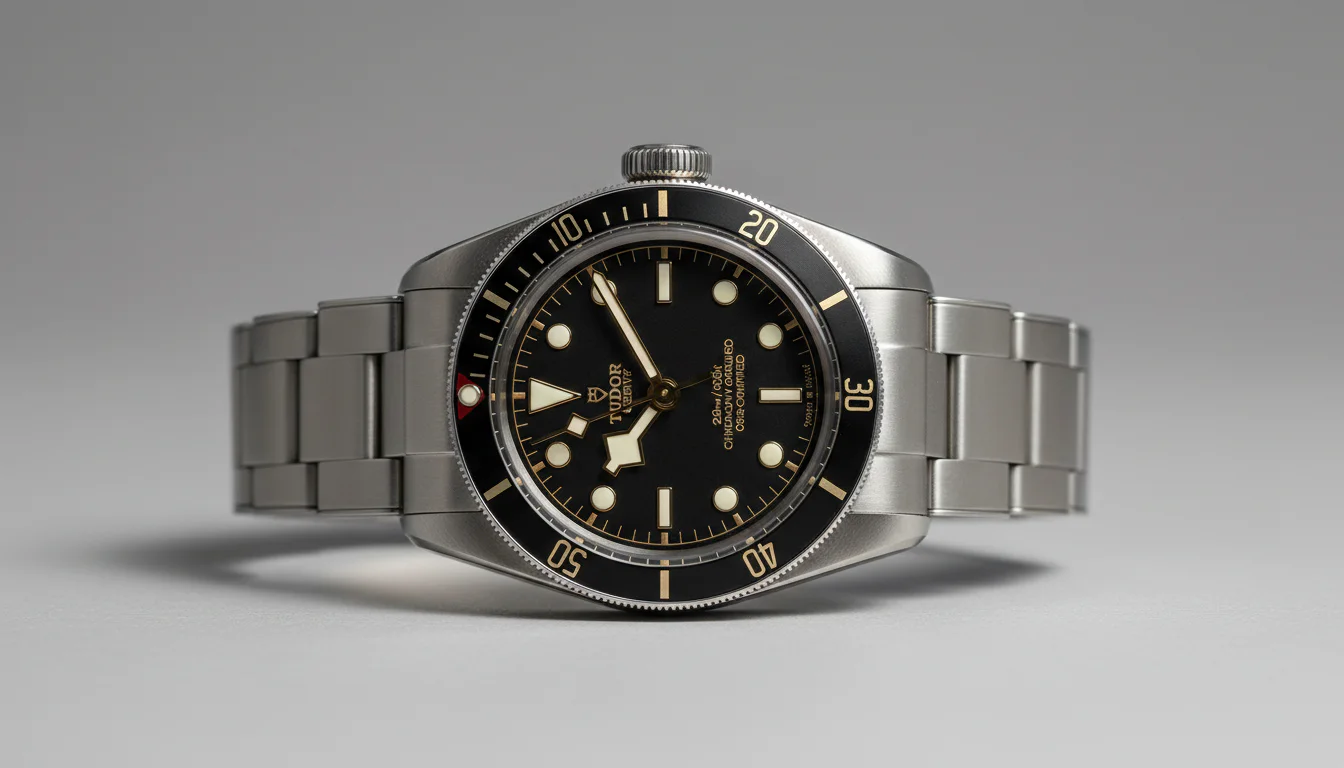 The Tudor Black Bay 58, the watch that put modern Tudor on most collectors' radars. The 2026 lineup centers on a refreshed BB58 alongside five other releases.
Here is the working dealer's breakdown of what landed and what it actually means.
The short answer
Tudor used its centennial year to push two things: more Master Chronometer (METAS) certification across the catalog, and a meaningful expansion beyond the Black Bay's tool-watch DNA. The Monarch revival is the most significant new model in years. The full ceramic Black Bay Ceramic is the most technically ambitious. The refreshed BB58 remains the buyer's pick for most people walking in cold.
The brand at 100, briefly
A few facts that frame everything else.
- Founded: February 17, 1926, by Hans Wilsdorf (also founder of Rolex)
- First serious production: 1940s, with bought-in movements in Rolex-supplied Oyster cases
- The original Black Bay reference point: the 1958 Tudor Submariner ref. 7924 "Big Crown," the first Tudor dive watch rated to 200 meters
- The modern Black Bay line: launched 2012
- Move to in-house movements: 2015, when the manufacture caliber MT5621 debuted in the Tudor North Flag
- First Master Chronometer (METAS) certification: 2021, on the original Black Bay Ceramic
The throughline is that Tudor has spent the last decade building genuine in-house watchmaking capability, partnering with Breitling and others through its sister manufacture Kenissi. The 2026 releases lean into that work rather than retreating into archive nostalgia.
The 2026 lineup at a glance
| Reference | Model | Key Update | Retail (USD) |
|---|---|---|---|
| M7939A1A0NU | Black Bay 58 | METAS certification, slimmer 11.7mm case, new 5-link bracelet option | $4,975 – $5,350 |
| M7950N1A0NU | Black Bay 58 GMT | New 5-link bracelet, METAS, MT5450-U with silicon hairspring | ~$5,000 (5-link adds premium) |
| M79000B | Black Bay 54 "Tudor Blue" | Sapphire blue dial and bezel, 37mm | $4,475 – $4,725 |
| 7941A1ACNU | Black Bay Ceramic | Full ceramic bracelet (industry-first scale) | $7,725 |
| Multiple | Tudor Royal (refreshed) | New 30/36/40mm sizes, manufacture calibers | ~$3,500 – $4,500 |
| Monarch (new) | Tudor Monarch | Revival of 1990s line, California dial, integrated H-bracelet | $5,875 |
Pricing per aBlogtoWatch April 2026 coverage and Chrono24 Magazine 2026 Tudor coverage.
Black Bay 58: refined for METAS
The BB58 has been the backbone of modern Tudor since 2018. The 2026 update is meaningful but not dramatic.
What changed
- METAS Master Chronometer certification. Tested at 0/+5 seconds per day, 15,000 Gauss magnetic resistance
- Slimmer case: 11.7mm thick, down from 11.9mm
- New 5-link bracelet option with T-fit clasp
- Movement: caliber MT5400-U (the U denotes the METAS variant) with 65-hour power reserve
- Subtle dial and crown refinements: redesigned crown sits flush, hand bases narrowed
What did not change
The 39mm case diameter, the 200m water resistance, the rivet-style 3-link bracelet option, the rubber strap option, and the gilt-on-black aesthetic that defines the BB58.
For most buyers shopping a first serious Swiss dive watch, the previous-generation ref. 79030N at sub-$3,000 pre-owned is still arguably the best value in the entire luxury dive watch market. The new generation adds METAS and a 5-link bracelet for $5,225 to $5,350. Either is a defensible buy.
For the full deep-dive on this reference, see our Tudor Black Bay 58 buying guide.
Black Bay 58 GMT: the mid-size traveler
This is the watch a lot of buyers have been asking for.
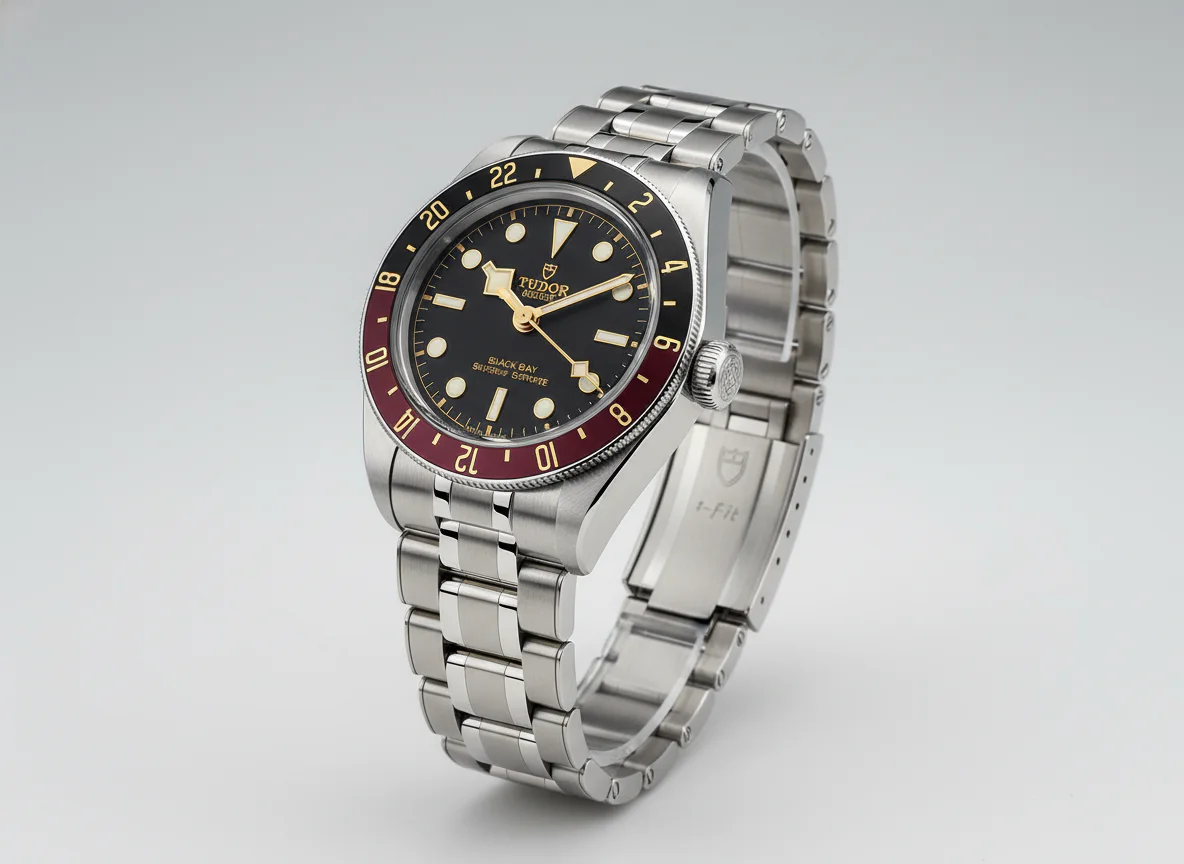 The 2026 BB58 GMT (M7950N1A0NU) with burgundy and black bicolor bezel and the new five-link bracelet. A 39mm GMT slot Tudor's catalog has needed for years.
The 2024 launch covered the basics: 39mm steel case, in-house METAS-certified MT5450-U with silicon hairspring, 65-hour power reserve, burgundy and black bezel with gilt accents, 24-hour GMT functionality. For 2026, Tudor added the 5-link bracelet option.
That is the entirety of the news mechanically.
But it matters because the alternatives have problems. The standard Black Bay GMT is 41mm, which is significant on smaller wrists. The Rolex GMT-Master II is impossible to land at retail and trading $17,000+ pre-owned. The BB58 GMT slots into the 39mm classic-proportions space at roughly a quarter of the secondary market premium of a Rolex GMT.
For Pepsi waitlist refugees, this is one of the smarter pivots available. We covered the broader reasoning in our Pepsi waitlist dealer advice post.
Black Bay 54 "Tudor Blue": dive heritage, dressed differently
The BB54 arrived in 2023 as the most historically faithful Black Bay ever made. It draws from the 1954 ref. 7922, Tudor's first dive watch, predating the Big Crown by four years. The signature detail is a bezel without minute hash marks, which gives the watch a distinctly minimal silhouette.
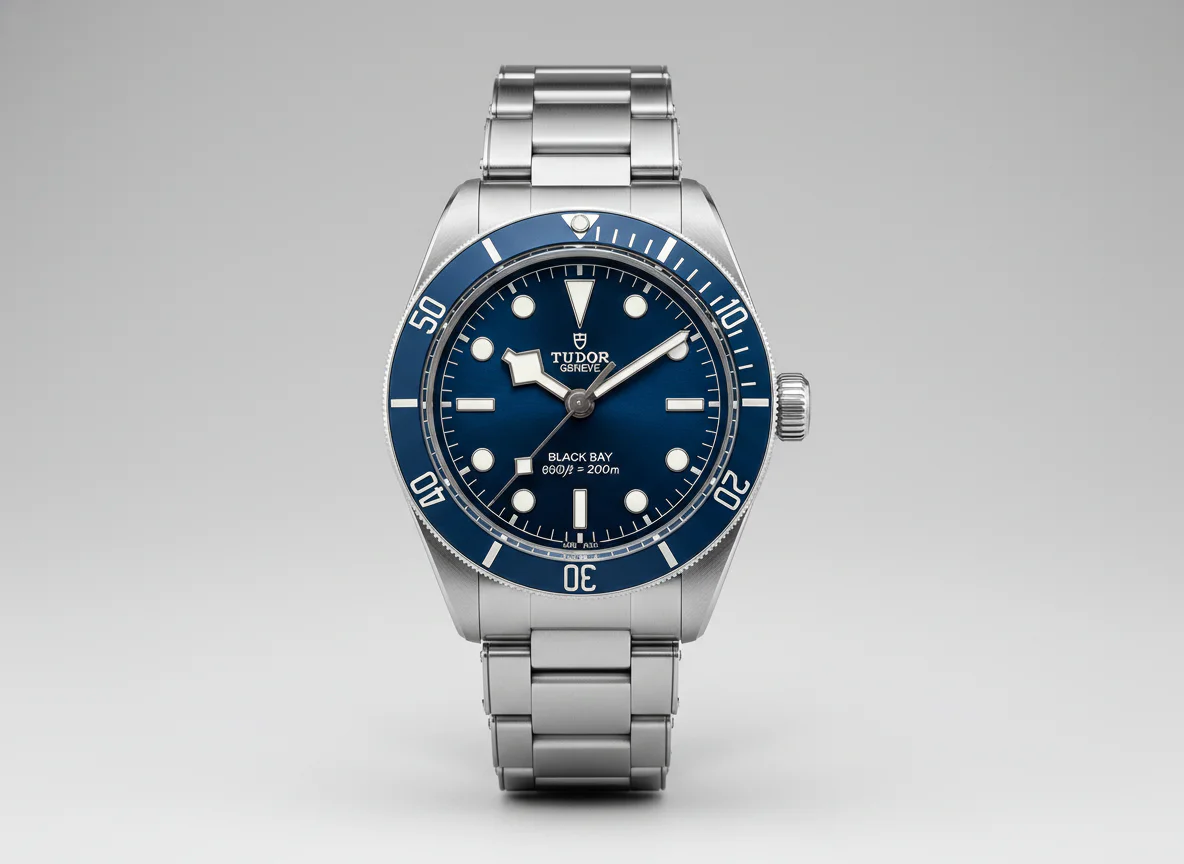 The Black Bay 54 Blue (M79000B) in "Tudor Blue," a saturated sapphire tone applied to both the sunray dial and the matching bezel insert. The 37mm case wears small in the modern dive-watch landscape.
For 2026, Tudor introduced "Tudor Blue," a saturated sapphire-tone color applied to both the sunray dial and the matching bezel insert. At 37mm, this is a genuinely small-wrist-friendly diver, and the blue execution makes it feel less like a dive watch and more like a watch you would wear with a blazer.
Mechanical specs are unchanged: 200m water resistance, COSC-certified caliber MT5400 with 70-hour power reserve. Pricing: $4,475 on rubber, $4,725 on the steel three-link bracelet.
Black Bay Ceramic: the technical flex
This is the most ambitious release of the lineup, and it does not get the headlines it deserves.
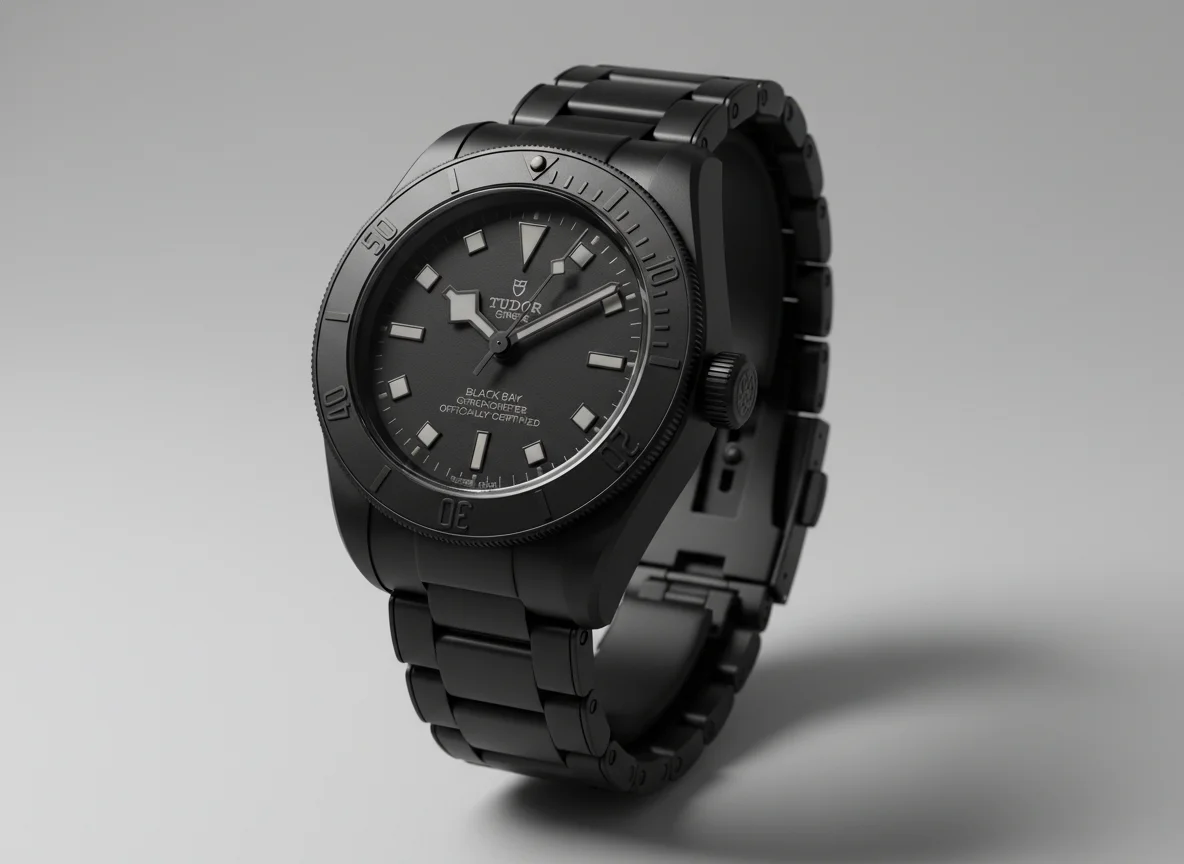 The 2026 Black Bay Ceramic (7941A1ACNU) with the new full ceramic bracelet. Ceramic bracelets are notoriously difficult to engineer, which is why the industry has very few of them at any price.
Ceramic is brittle, hard to machine, and intolerant of dimensional inconsistency. That is why ceramic bracelets are rare across the entire watch industry, even at six-figure price points. Tudor took a hybrid leather-rubber strap approach when the original Black Bay Ceramic launched in 2021.
For 2026, the brand engineered a three-link ceramic bracelet with a proprietary dual folding ceramic clasp. The 41mm monobloc black ceramic case carries the signature sandblasted finish, the dial goes black-on-black, and the movement is the METAS-certified MT5602-U with a 70-hour power reserve.
Retail: $7,725 on the new ceramic bracelet, $1,600 less on the original hybrid strap.
This is the most expensive watch in the lineup, but it is also the one that most clearly signals Tudor's material engineering ambitions. Compare it to a comparable ceramic-bracelet watch from any other Swiss manufacture and the price-to-capability ratio is genuinely sharp.
Tudor Royal: the catalog cleanup
The Royal line, with its engine-turned "checkerboard" fluted bezel and integrated five-link bracelet, was Tudor's quiet entry into integrated-bracelet sport-dress territory. It previously came in four sizes (28, 34, 38, 41mm). For 2026, that has been trimmed to three: 30, 36, and 40mm.
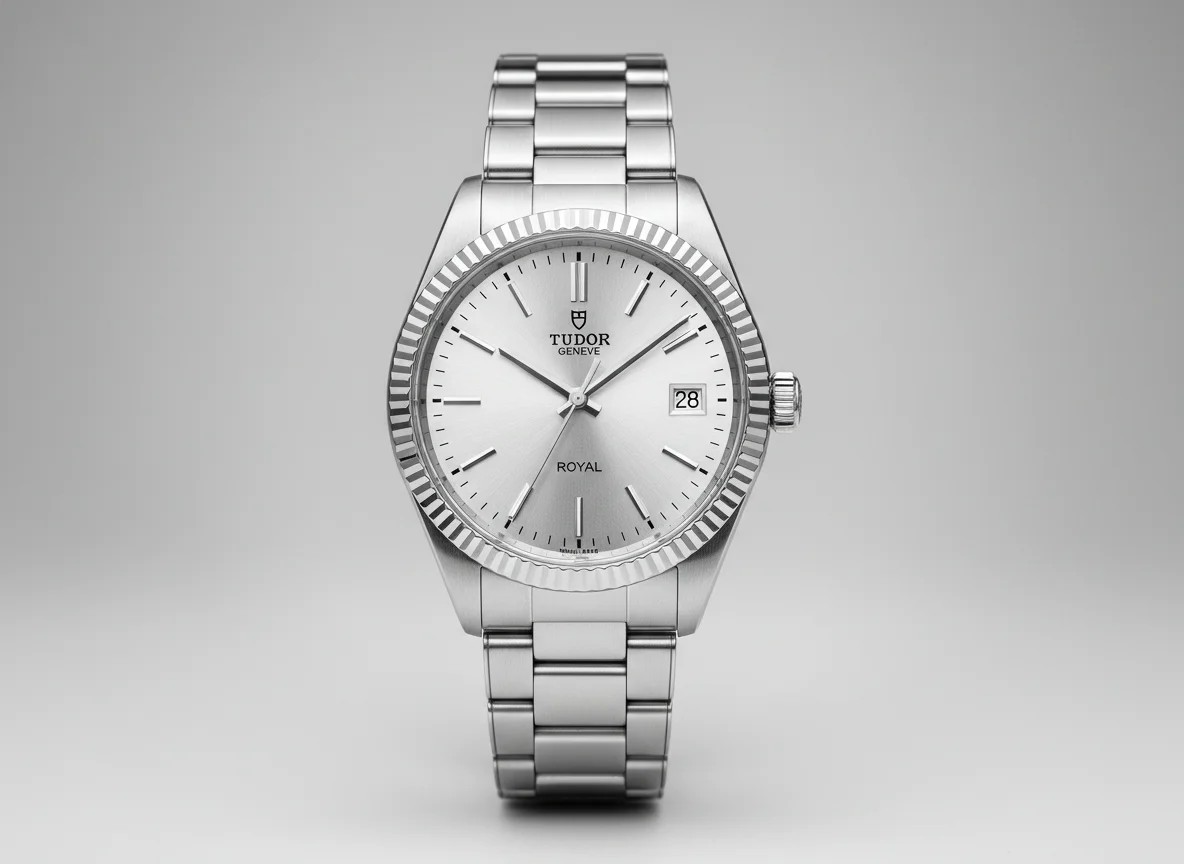 The 2026 Tudor Royal 36mm with the refreshed engine-turned bezel and integrated bracelet. The new sizing slots between the old options and addresses the 28mm being too small and the 41mm being too large for modern proportions.
The bezel notches are now sharper and more precisely cut. The bracelet end links have been redesigned to prevent abrasion against the case. The 40mm version gains a day complication at 12 o'clock alongside the date, while the 30mm picks up burgundy and mother-of-pearl dial options.
The Royal is not the headline watch in this lineup, but it is the most quietly improved one. For buyers who want an integrated-bracelet steel watch under $4,500 and find the AP Royal Oak and Patek Nautilus economically irrational, the Royal does the job.
Tudor Monarch: the revival nobody saw coming
This is the watch worth paying attention to.
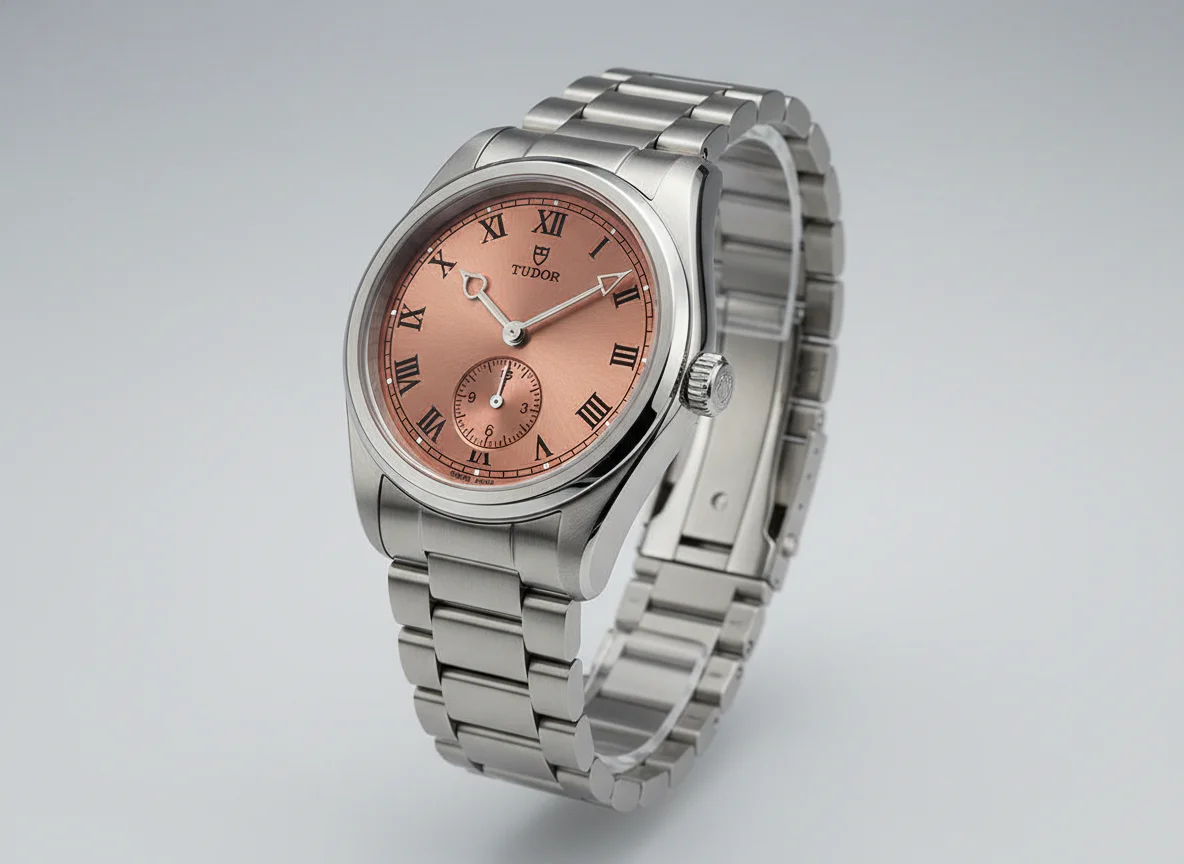 The 2026 Tudor Monarch revival with its California dial (Roman numerals 10-2, Arabic 4-8), salmon "dark champagne" dial finish, and integrated two-link H-style bracelet. The most distinctive Tudor release in years.
The Monarch was a quartz line from 1991 that ran into the early 2000s. Most collectors have never thought about it. For 2026, Tudor revived the name and built a genuinely original watch around it.
What it is
- 39mm stainless steel case with satin-finished and polished surfaces
- Integrated two-link H-style bracelet with T-fit clasp
- Salmon "dark champagne" dial with brushed texture (Tudor's marketing copy uses both terms)
- California dial layout: Roman numerals from 10 to 2, Arabic numerals from 4 to 8
- Sub-seconds register at 6 o'clock
- Hands: a hybrid of Breguet and snowflake design
- No luminous material for the vintage aesthetic
- Movement: in-house manufacture caliber, 100m water resistance
- Retail: $5,875
Per Luxury Bazaar's W&W 2026 coverage, this is arguably the most significant Tudor release of 2026.
Why it matters
Tudor has spent a decade building the Black Bay into the brand's commercial center of gravity. Every product decision has reinforced that. The Monarch is the first new model in years that does not borrow Black Bay design language at all.
The California dial alone makes this watch unique in the Swiss mainstream catalog. The integrated bracelet plus Patek-Nautilus-adjacent silhouette puts it in conversation with watches that cost three to ten times as much. The salmon dial is the right color for the moment.
For collectors who want a Tudor that does not look like everyone else's Tudor, this is the one. We covered the broader case for Swiss watches under $5,000 in our best dress watches under $5,000 guide, and the Monarch fits that conversation directly.
What the lineup actually says about Tudor's next decade
Six watches do not tell a brand's whole story. But three threads are clear.
1. METAS is becoming the standard
Master Chronometer certification is now on the BB58, BB58 GMT, BB54, Black Bay Ceramic, Black Bay 41 Monochrome, and the Pelagos Ultra. The 1926, Ranger, Black Bay Pro, Black Bay Chrono, and parts of the Pelagos FXD line still sit outside METAS coverage. Expect that gap to close over the next two to three years.
2. Material engineering is a real differentiator
The full ceramic bracelet on the Black Bay Ceramic, the silicon hairspring across multiple in-house calibers, the Tudor Blue color development. The brand is treating materials and movement engineering as a competitive lane where it can win without trying to outprice independent watchmakers.
3. Tudor is finally building beyond the Black Bay
The Monarch is the proof point. It is not a Black Bay variant. It is a deliberately different design that gives Tudor a wider catalog without diluting the Black Bay's commercial position. Expect more of this through the rest of 2026 and into 2027.
The dealer's recommendation
For most buyers walking into a centennial-year Tudor purchase, the refreshed Black Bay 58 is still the right answer. It is the most liquid, the most universally legible, the best-positioned for resale, and the easiest to wear in any context.
If you already own a BB58 or its predecessor, the Monarch is the most interesting piece in the lineup. It does something none of your other watches do.
If you specifically want a 39mm GMT for travel and you have been waiting on a Rolex allocation, the BB58 GMT on the new five-link bracelet is genuinely the smarter purchase right now.
The Black Bay 54 Blue at $4,725 is the small-wrist diver play. The Black Bay Ceramic with the new bracelet is the technical-flex piece. The Royal is the quiet integrated-bracelet steel-and-dial alternative to watches that cost three times as much.
The Tudor 100th anniversary lineup is not a victory lap. It is the brand making its case for the next decade. The watches that matter most are the ones that signal where Tudor is going, not the ones that celebrate where it has been.
For broader context on how Tudor stacks against its parent brand, see our Rolex vs Tudor comparison. For the wider Swiss-watch-under-$10,000 landscape, see our best watches under $10,000 in 2026 guide.
Browse our authenticated pre-owned Tudor inventory at 5dwatches.com/shop/tudor. Every piece includes movement inspection, condition documentation, and service history disclosure before we list it.