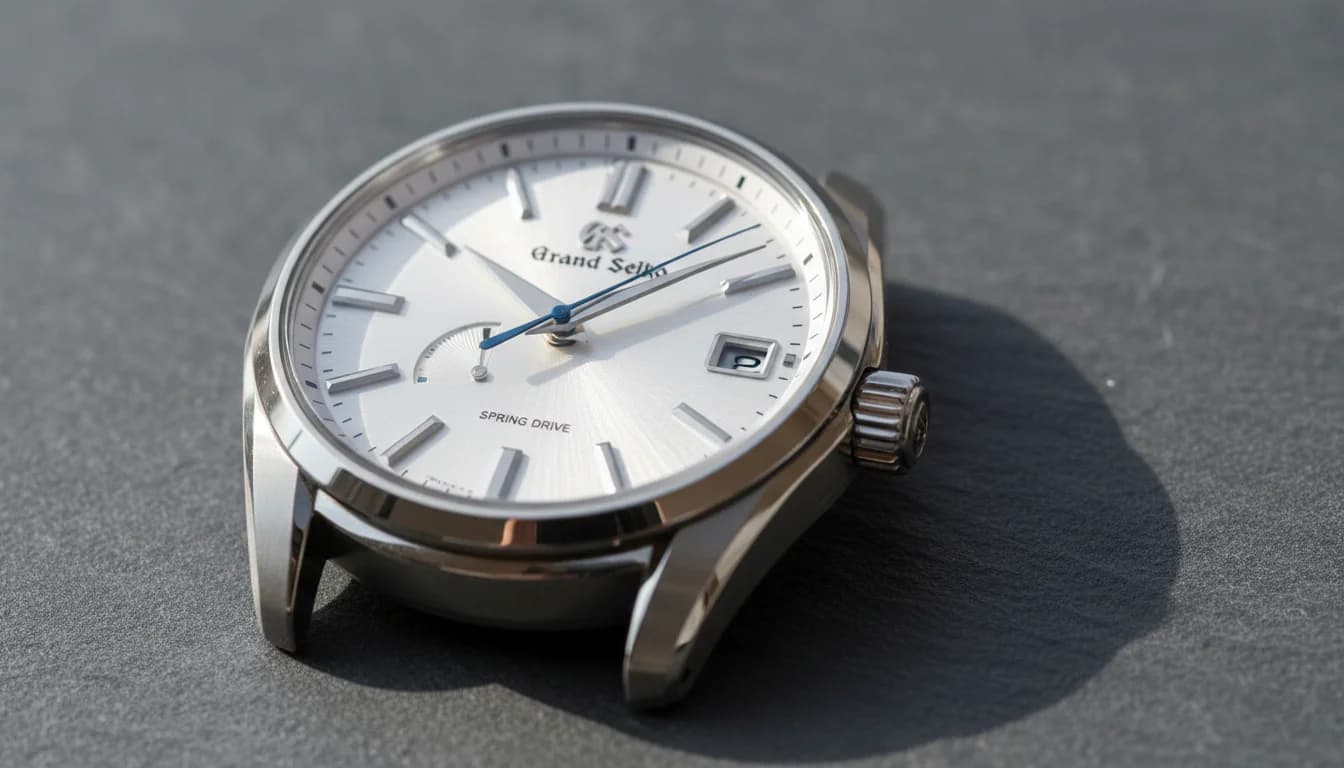
The Grand Seiko SBGA211 "Snowflake" retails for $6,395. The IWC Pilot's Watch Mark XX (IW328201) retails for $5,100. Both of these watches look, to virtually every person who sees them, like they belong at twice the price. That's not an accident. It's finishing.
Most buyers focus on brand name and complications. The people who actually understand watches focus on what light does to a surface.
TL;DR
- Finishing — not complication count — is what makes a watch read as expensive on the wrist
- Grand Seiko's Zaratsu polishing delivers a level of case quality that rivals watches costing three times as much
- Tudor, Omega, and IWC all carry serious aesthetic credibility at prices well below their "inspiration" brands
- Pre-owned prices on all four brands are significantly below retail, which widens the value gap further
- None of these are budget watches: they are watches that look expensive because they are built to a very high standard
What Actually Makes a Watch Look Expensive
You can train your eye in about 30 seconds. Pick up two watches in the same price range. Look at where the polished surfaces meet the brushed ones. On a cheap watch, those transitions are rounded and soft. On a quality watch, they are razor sharp.
That crispness is the visual signature of serious case finishing. It's expensive to execute because it requires hand-work, patience, and tight tolerances. Machines can approximate it. They can't replicate it.
The Two Finishes That Matter Most
Brushed surfaces scatter light. They read as matte, functional, and modern. Polished surfaces are mirrors: they reflect everything in the room, and they make a case look three-dimensional even at a glance.
The contrast between the two, when the boundary is perfectly sharp, is what makes a watch photograph beautifully and look like it costs money in person. This is not a subjective opinion. It's physics.
Why Dial Texture Matters as Much as the Case
A flat printed dial looks cheap because it is. A dial with texture — sunburst brushing, applied indices, a lacquered or enamel surface — catches light differently at every angle. It has depth.
The Grand Seiko dials most associated with this effect take direct inspiration from the Japanese landscape. The Snowflake dial mimics a snow-covered forest floor. The texture is created by a hand-applied process, not a machine stamp. The result is a dial that has never looked the same twice under different lighting.
Grand Seiko: The Finishing Argument Nobody Talks About Enough
A $6,395 Grand Seiko SBGA211 has Zaratsu-polished case surfaces. The Zaratsu process uses a flat, hard rotating plate to cut distortion-free planes into the steel. Most Swiss brands use conventional buffing wheels, which round off edges slightly and introduce subtle waviness into flat surfaces. The difference is visible under any decent light.
The result on the Snowflake: a 41mm titanium case with alternating brushed and mirror-polished planes so sharply defined that some watch writers have compared the effect to a gemstone. The case weighs 99g with the bracelet.
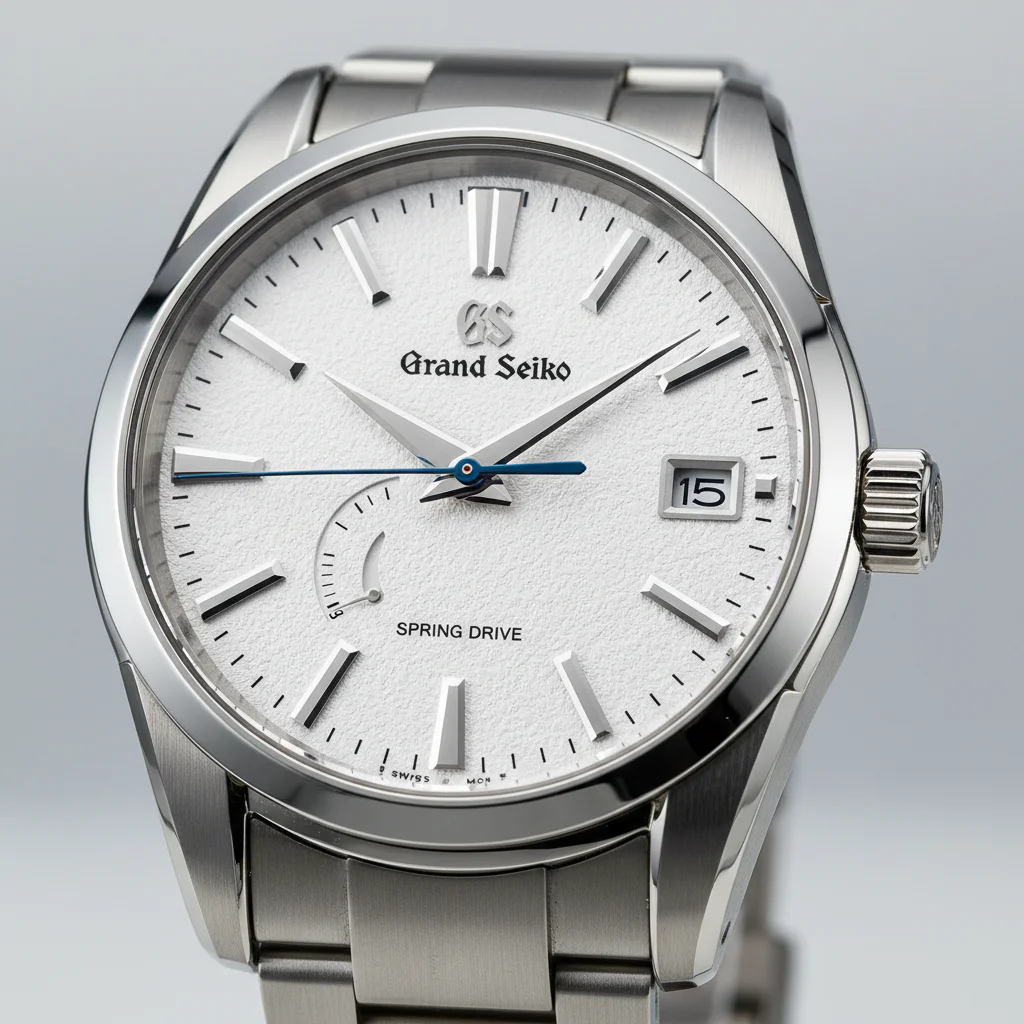
The Spring Drive movement inside — caliber 9R65 — achieves ±1 second per day accuracy using a glide spring and electromagnetic brake to regulate the mainspring's energy release. Rolex's caliber 3235, by comparison, is rated to ±2 seconds per day. Both are exceptional. The Grand Seiko does it differently.
The Price Argument in Plain Numbers
Pre-owned SBGA211 examples currently sell in the $3,100–$4,900 range depending on condition and box/papers (WatchCharts, April 2026). A new one costs $6,395. The pre-owned market has increased 8.1% year-over-year, which reflects growing collector recognition.
For context: a watch that competes with Grand Seiko's finishing on the Swiss side — think Vacheron Constantin, Audemars Piguet, F.P. Journe — starts somewhere around $15,000 to $20,000 new. The Snowflake at $6,395 new, or $3,500–$4,500 pre-owned, is buying case finishing that the Swiss charge three times as much to deliver.
If you want to dig deeper into building a collection around value-for-quality rather than pure brand recognition, the post 3 Watches Every Collector Should Own covers this territory well.
Tudor Black Bay 58: All the Aesthetic Credibility, Without the Waitlist
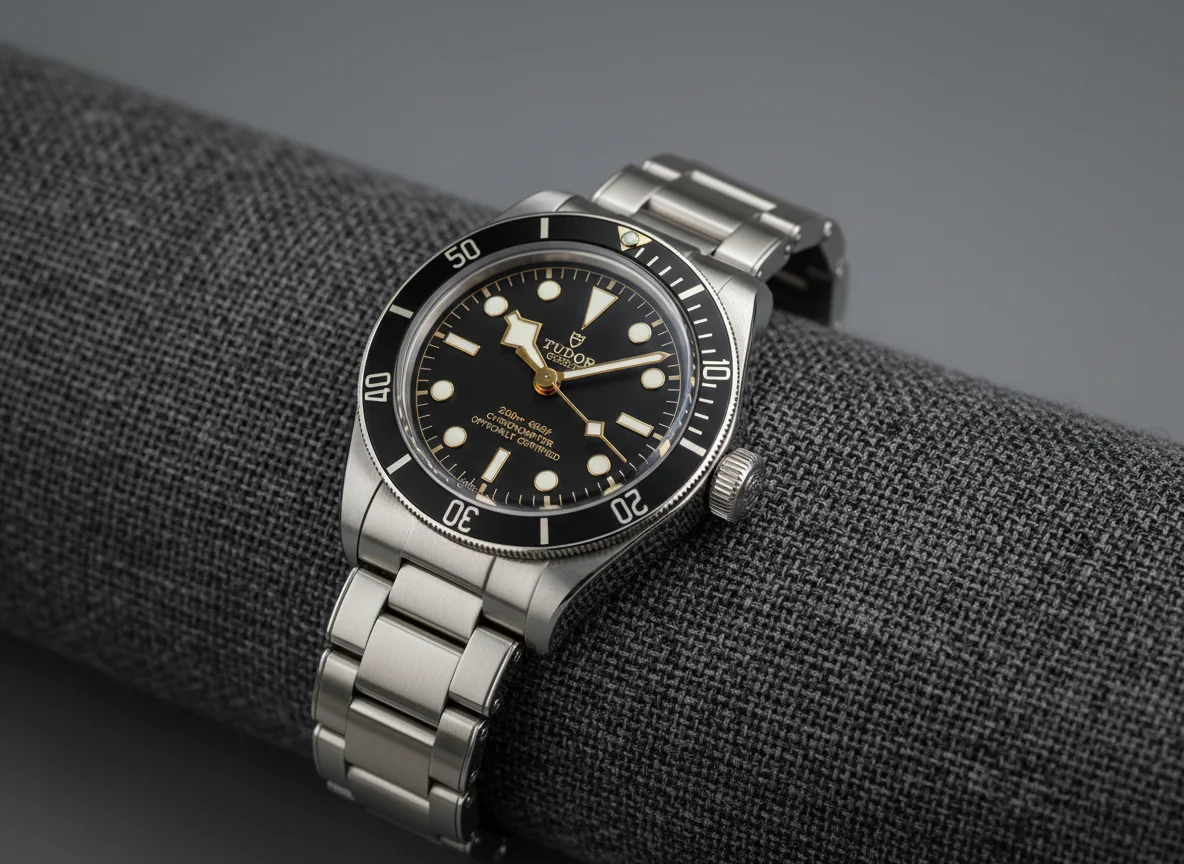
The Tudor Black Bay 58 (M79030N in black, M79030B in blue) is a 39mm dive watch that has a bracelet and case presence substantially above its price point. Current retail is $5,225 on the five-link bracelet.
The proportions are the reason it works. At 11.7mm thick and 39mm wide, it wears like a dress watch that can go diving. The five-link bracelet is solid, with a brushed center link flanked by polished outer links. On the wrist, the combination reads as substantial without being heavy.
What Tudor Gets Right That Others Don't
Tudor moved to an in-house movement in 2015. The current Black Bay 58 runs caliber MT5400, rated to METAS Master Chronometer standard: +5/-3 seconds per day from the factory, anti-magnetic to >15,000 gauss. That's better than COSC, and the same certification standard Omega uses on its higher-end pieces.
Pre-owned M79030N examples sell in the $3,400–$4,000 range (WatchCharts, April 2026). That puts a METAS-certified, Swiss-made, in-house movement dive watch well under $4,000 on the secondary market.
The obvious question is why you'd choose this over the Rolex Submariner it clearly acknowledges. The Rolex vs Tudor comparison covers that in detail. The short version: the Tudor has the better bracelet clasp at its price tier, the METAS certification, and a design that holds up in any room. What it lacks is the Rolex name, which matters to some people and not at all to others.
If your ceiling is $5,000 pre-owned, the best watches under $5,000 guide walks through the full field.
IWC Pilot's Watch Mark XX: The Legibility Standard
The IWC Pilot's Watch Mark XX (IW328201) solves a problem most watches create: legibility. This is a 40mm watch with a matte black dial, white Arabic numerals, a sword-shaped hour hand, and a minute hand that extends to the chapter ring. You can read it in the dark from across a room.
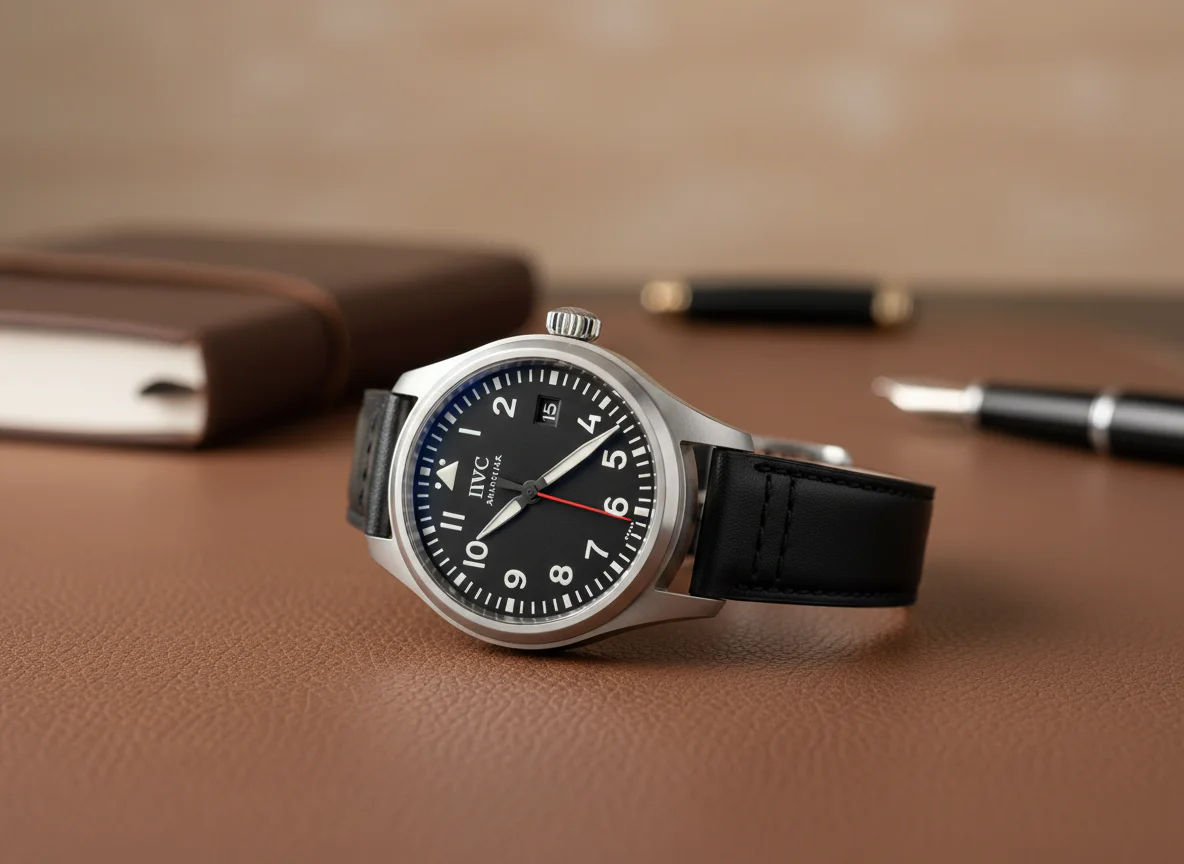
The case has a soft-iron inner cage for anti-magnetic protection. The movement is the IWC caliber 32111, beating at 28,800 vph with a 5-day power reserve. That power reserve is genuinely useful: come back from a long weekend and the watch is still running.
Why the Pilot Aesthetic Earns Its Money
The design language of military aviation watches commands attention partly because it has no unnecessary decoration. Everything on the dial is there for function. The result is a watch that reads as deliberate and expensive without depending on polished surfaces or textured dials to do the work.
Retail is $5,100. Pre-owned examples sell around $3,350 for clean examples with good provenance (Chrono24, early 2026). Ranked in the top 2% of IWC references by secondary market popularity, which tells you collector demand is real.
Omega Seamaster Diver 300M: The One That Actually Competes With Rolex
The Omega Seamaster Diver 300M (210.30.42.20.01.001) is the watch that makes Rolex's quality argument harder to sustain at a price comparison. Both are Swiss. Both have in-house movements. Both are respected across the industry.
The Seamaster runs caliber 8800, Master Chronometer certified to ±0/+5 seconds per day — more accurate than COSC and independently tested by METAS. The case is 42mm stainless steel with a black ceramic bezel and black ceramic dial with laser-engraved wave texture. Water resistance is 300m.
The Pre-Owned Case for the Seamaster
Pre-owned 210.30.42.20.01.001 examples sell in the $3,400–$4,250 range (WatchCharts, December 2025). The market has increased 6.6% over five years, which is stable without being speculative.
This is a watch where the gap between what it is and what it costs to acquire pre-owned is unusually wide. The ceramic dial, the co-axial escapement, the METAS certification, the 300m water resistance: all of that in the $3,400–$4,500 range is serious value.
For a broader look at the field at this price point, the best watches under $10,000 guide covers Omega, Grand Seiko, and several Swiss options side by side.
The Full Picture: What You're Actually Buying
| Watch | Reference | Case | Movement | Retail | Pre-Owned Est. |
|---|---|---|---|---|---|
| Grand Seiko Snowflake | SBGA211 | 41mm titanium | Spring Drive 9R65, ±1 sec/day | $6,395 | $3,100–$4,900 |
| Tudor Black Bay 58 | M79030N | 39mm steel | MT5400 METAS, +5/-3 sec/day | $5,225 | $3,400–$4,000 |
| IWC Pilot Mark XX | IW328201 | 40mm steel | Cal. 32111, 5-day reserve | $5,100 | ~$3,350 |
| Omega Seamaster 300M | 210.30.42.20.01.001 | 42mm steel | Cal. 8800 METAS, ±0/+5 sec/day | $6,500 | $3,400–$4,250 |
The common thread: all four watches are built to a technical and finishing standard that the buyer perceives as expensive, because it is expensive to produce. The fact that they cost less than the brands they're most often compared to reflects marketing and heritage, not a shortfall in quality.
That's not a consolation prize. It's the argument.
Where to Get One
Browse authenticated pre-owned watches at 5D Watches — every watch is inspected, authenticated, and sold with a warranty. Shop Tudor, Omega, Grand Seiko, and IWC.